
El Audi R8 Mk2.5 ya llama la atención. El superdeportivo V10 de aspiración natural de Ingolstadt no necesita presentación, pero hay un subconjunto de propietarios que ven la estética de fábrica como un mero punto de partida. Para aquellos que buscan amplificar la agresividad visual del R8 a la vez que introducen mejoras aerodinámicas funcionales, los componentes de fibra de carbono seca preimpregnada ofrecen un camino hacia la transformación que respeta el pedigrí de ingeniería del coche.
Lo que sigue no es un recital de catálogo. En cambio, se trata de un análisis considerado de cinco modificaciones de fibra de carbono que realmente alteran la presencia del R8 Mk2.5, cada una seleccionada por su capacidad para ofrecer un impacto visual proporcional junto con una contribución aerodinámica medible. Tanto si su objetivo es un refinamiento discreto como una agresividad orientada al circuito, estas mejoras forman la base de una estrategia estética cohesiva.
1. El labio delantero: Estableciendo la agresividad frontal y la carga aerodinámica del eje delantero
Los splitters delanteros ocupan la zona crítica donde la intención aerodinámica se une a la declaración visual. En el R8 Mk2.5, el parachoques delantero de fábrica presenta líneas limpias pero carece de la proyección hacia adelante que distingue a una máquina seria orientada al rendimiento. Un labio delantero de fibra de carbono diseñado correctamente aborda ambas deficiencias simultáneamente.
El principio aerodinámico es sencillo: extender el splitter delantero aumenta el área efectiva para generar carga aerodinámica en el eje delantero a la vez que reduce la presión debajo del coche. A velocidades de autopista, esto se traduce en una mayor estabilidad a alta velocidad y una respuesta más consistente en las curvas. Visualmente, el cambio es inmediato: la parte delantera del R8 gana una anchura intencionada y una postura asentada, lo que reduce el centro de gravedad percibido incluso antes de que entren en juego las modificaciones de la suspensión.
La especificación del material es de vital importancia aquí. La fibra de carbono preimpregnada ofrece una rigidez que las alternativas de fibra de vidrio no pueden igualar, manteniendo una geometría aerodinámica consistente bajo carga en lugar de flexionarse y comprometer la eficacia a velocidad. La claridad visual de un tejido de sarga 2x2 adecuado también distingue el carbono genuino del plástico recubierto, un detalle que importa a los observadores exigentes.
2. Canards delanteros: Gestión precisa del flujo de aire para el trabajo en pista
Mientras que el labio delantero establece la presencia de referencia, los elementos canard introducen un refinamiento aerodinámico específico. Estos apéndices con perfil de ala se montan en el exterior de la estructura principal del parachoques, generando vórtices discretos que gestionan el flujo de aire a lo largo de los flancos del coche a la vez que contribuyen a una carga aerodinámica frontal incremental.
La transformación visual que ofrecen los canards es inconfundible: comunican la intención de carrera sin ambigüedades. Para los propietarios que participan en días de pista o eventos de conducción competitiva, esta honestidad estética se alinea con la realidad funcional. Los vórtices generados por canards bien diseñados reducen la turbulencia en la zona del paso de rueda delantero, lo que a velocidades de circuito contribuye al equilibrio aerodinámico general y a la estabilidad en los cambios rápidos de dirección.
La instalación requiere precisión. Los canards deben alinearse con la geometría de la superficie del parachoques para funcionar correctamente; los ejemplos mal ajustados crean arrastre en lugar de carga aerodinámica. Los componentes preimpregnados de calidad incluyen el hardware de montaje adecuado y mantienen una precisión dimensional que permite un ajuste correcto sin modificaciones.
3. Side Blades: El elemento distintivo del R8 reinventado
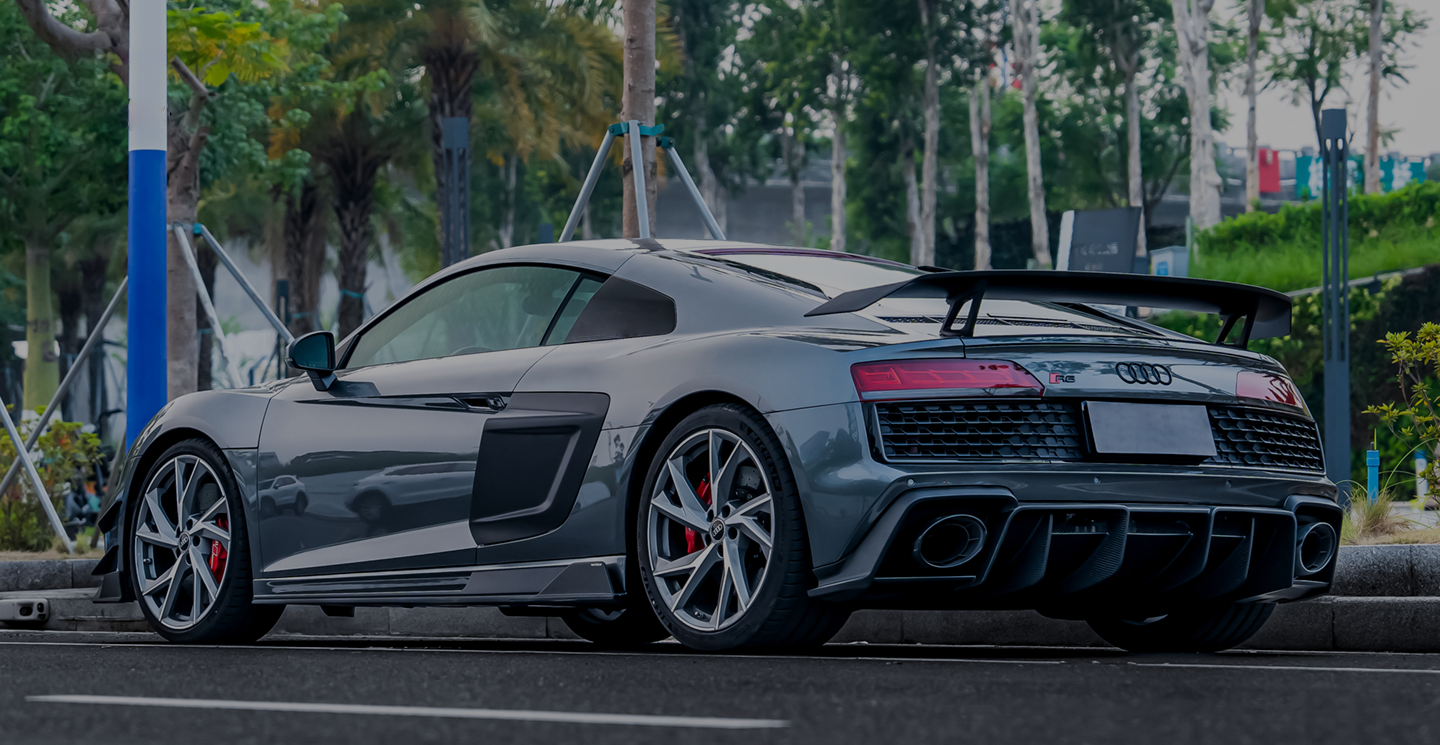
Las tomas de aire laterales del R8 definen el perfil del coche. Las versiones de fábrica en plástico negro brillante cumplen su propósito, pero la sustitución por alternativas de fibra de carbono introduce una autenticidad material que transforma la visual de la parte media del coche. Esto no es una mera postura cosmética, se trata de la consistencia material en el lenguaje visual del coche.
Las side blades de carbono captan la luz de manera diferente a lo largo del día. El patrón de tejido crea una profundidad que el plástico de acabado plano no puede replicar, añadiendo complejidad visual a lo que ya es el elemento de estilo más distintivo del R8. Para los propietarios que construyen un paquete exterior completo de carbono, las side blades representan una continuidad esencial: unen los tratamientos delanteros y traseros a la vez que enfatizan la arquitectura de motor central del coche.
La reducción de peso aquí es mínima pero medible. Más significativamente, las side blades de carbono eliminan el desvanecimiento y la decoloración del plástico que afecta a los componentes de fábrica con el tiempo, particularmente en coches que tienen un uso regular o exposición en pista.
4. Difusor trasero: Ingeniería de la estabilidad del eje trasero y compleción visual
El difusor trasero del R8 gestiona la extracción crítica del flujo de aire inferior. Los componentes de fábrica cumplen los requisitos básicos, pero los difusores traseros de fibra de carbono del mercado de accesorios suelen incorporar ángulos de aleta más agresivos y una mayor área de extracción, modificaciones que aceleran el flujo de aire inferior y aumentan la carga aerodinámica trasera.
Visualmente, un difusor trasero mejorado completa la historia de la parte inferior del coche. Añade anchura visual y complejidad al aspecto trasero, creando una estabilidad percibida incluso cuando está parado. Combinado con las side blades de carbono, el efecto establece una consistencia material en las superficies inferiores del coche, esencial para una ejecución estética cohesiva.
Desde una perspectiva funcional, una mayor eficiencia del difusor a velocidad reduce la sustentación trasera, lo que en una plataforma de motor central como el R8 se traduce directamente en confianza a alta velocidad y estabilidad durante el frenado brusco desde velocidades elevadas. Los propietarios centrados en la pista informan de una estabilidad trasera notablemente mejorada en secciones rápidas después de las actualizaciones del difusor, particularmente cuando se combina con modificaciones complementarias de carga aerodinámica frontal.
5. Capó de carbono: Reducción sustancial de peso donde más importa
Si las modificaciones anteriores se centran en la transformación visual y el refinamiento aerodinámico, un capó de carbono representa pura lógica de ingeniería. La tapa del compartimento de equipaje delantero del R8, cuando se reemplaza por fibra de carbono preimpregnada, ofrece una reducción de peso medible en una ubicación que influye en las características de manejo: delante del eje delantero, donde la reducción de masa más beneficia la respuesta en las curvas y reduce el momento polar de inercia.
El ahorro de peso varía según las especificaciones de fábrica, pero espere una reducción significativa que sentirá durante la conducción enérgica. Más significativamente, el capó de carbono introduce la especificación de material auténtico de los deportes de motor en la superficie horizontal más visible del coche, una declaración visual que distingue a los R8 modificados con un enfoque de rendimiento genuino de aquellos con alteraciones puramente cosméticas.
Los capós de carbono adecuados incorporan consideraciones funcionales: patrones de ventilación que ayudan a la extracción de calor, rigidez estructural que mantiene las holguras del panel y capa transparente estable a los rayos UV que conserva la claridad del tejido durante años de exposición. Estas no son consideraciones triviales: los capós de carbono mal ejecutados se deforman, se decoloran o requieren un ajuste constante para mantener un ajuste adecuado.
Integración, no acumulación
La distinción entre una estrategia de mejora de carbono bien concebida y la acumulación desordenada de componentes radica en la coherencia visual. Cada modificación debe complementar los elementos existentes, construyendo una estética unificada en lugar de competir por la atención. Comience con componentes fundamentales como el labio delantero y las side blades, luego progrese a elementos más agresivos a medida que su visión se aclare.
La calidad del material determina la longevidad. La fibra de carbono seca preimpregnada, correctamente revestida con una capa transparente y protegida contra los rayos UV, mantiene su claridad visual indefinidamente. El carbono de capa húmeda inferior amarillea, se delamina y requiere reemplazo; una falsa economía que cuesta más durante el período de propiedad que invertir correctamente desde el principio.
El R8 Mk2.5 merece modificaciones que respeten su integridad de ingeniería. Elija componentes de carbono que ofrezcan una contribución aerodinámica genuina junto con una transformación visual, y construya su paquete exterior con la misma precisión metódica que Audi aplicó al diseño original del coche.